Manioc

The Root Beneath the Fields
Pakxong, Laos

A Crop Hidden Below Ground

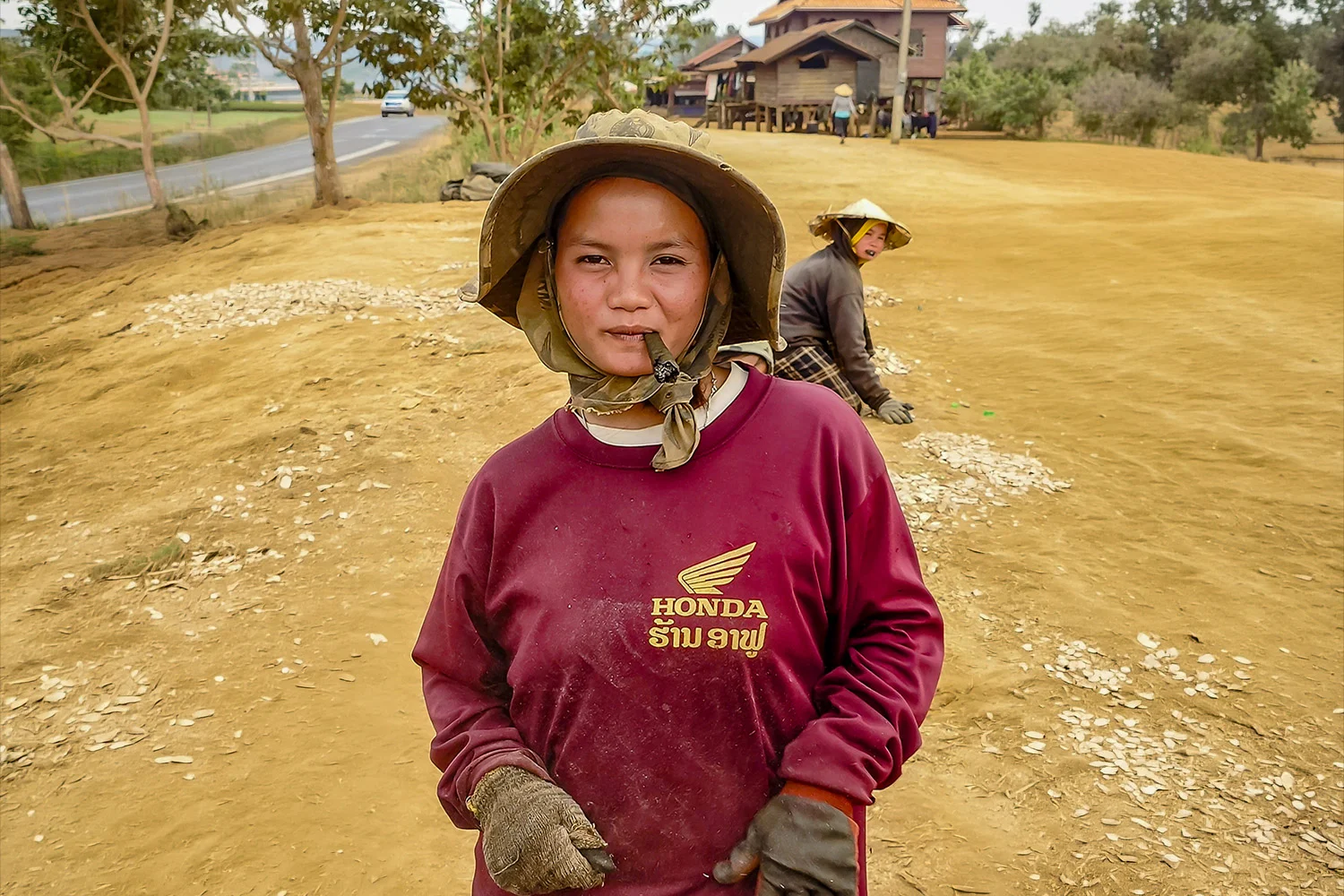
Travelling across southern Laos, we repeatedly came across large areas covered with thousands of white slices drying in the sun. At first, I had no idea what they were. Only later did I learn that they were manioc roots, harvested, sliced, and prepared for further processing. What appeared to be an ordinary agricultural activity revealed one of the region's most important crops.

Beyond The Drying Fields

Driving through the Bolaven Plateau near Pakxong, I noticed large open spaces covered with pale pieces spread across the ground. From a distance they looked like stones or wood chips. Curiosity made me stop and take a closer look.

The answer was manioc, also known internationally as cassava.

Known internationally as cassava, manioc is one of the world's most important food crops. While the plant above ground appears rather modest, its value lies beneath the soil. Large starchy roots are harvested and processed into food products, starch, animal feed and a wide range of industrial applications.

Throughout Laos, manioc has become an important source of income for many rural communities. After harvesting, the roots are often cut into small pieces and dried naturally in the tropical sun before being transported for further processing.

What fascinated me was how easily a traveller could overlook its importance. Visitors often remember waterfalls, temples and mountain landscapes. Yet crops like manioc quietly shape everyday life and provide livelihoods for countless families.

Standing beside these drying roots in Pakxong, I was reminded that travel is often about discovering the ordinary. Sometimes the most interesting stories are not found in famous landmarks but in the activities that sustain an entire region.

Joy, Manioc Worker ,Pakxong, Laos
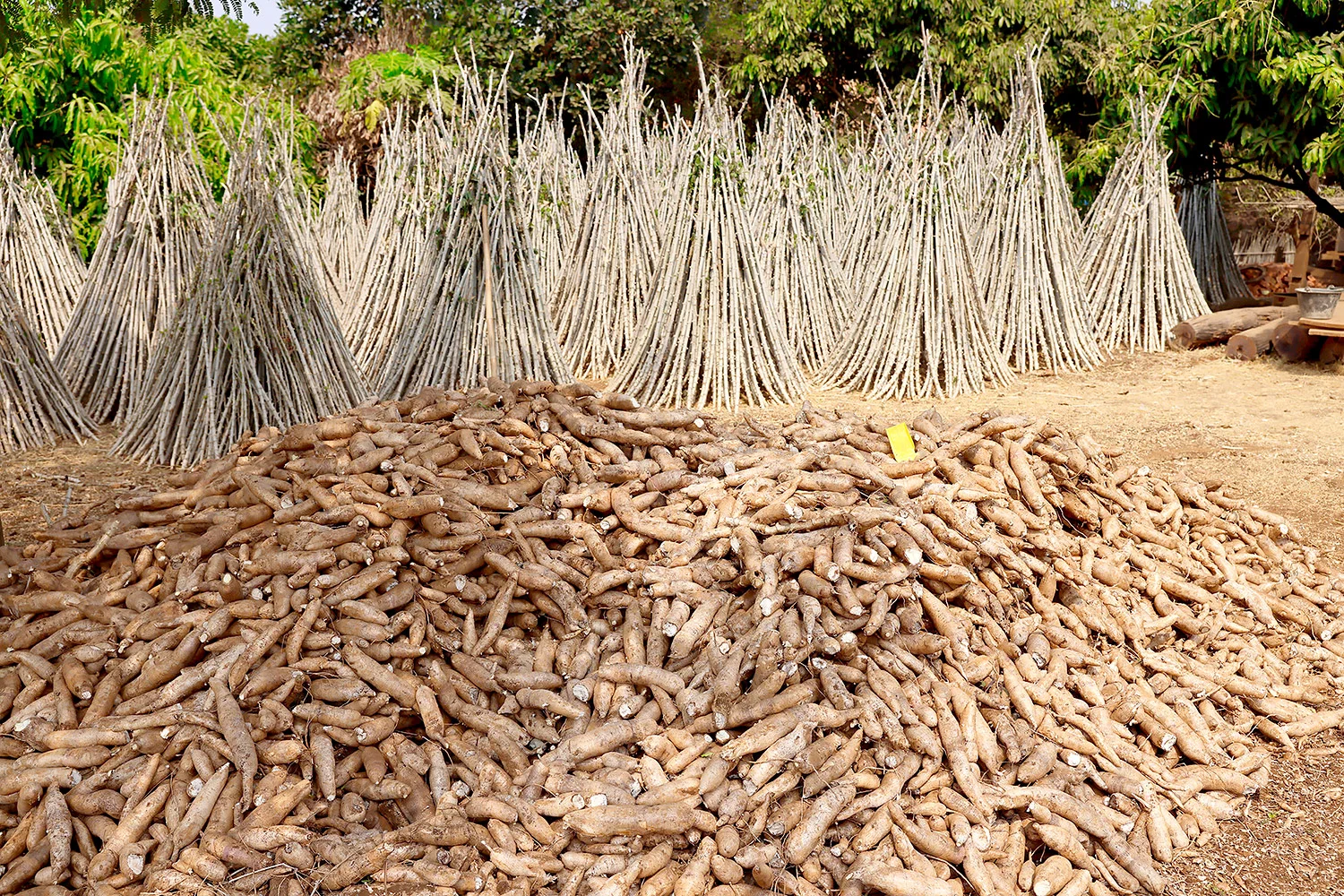
Cassava Ready For Processing
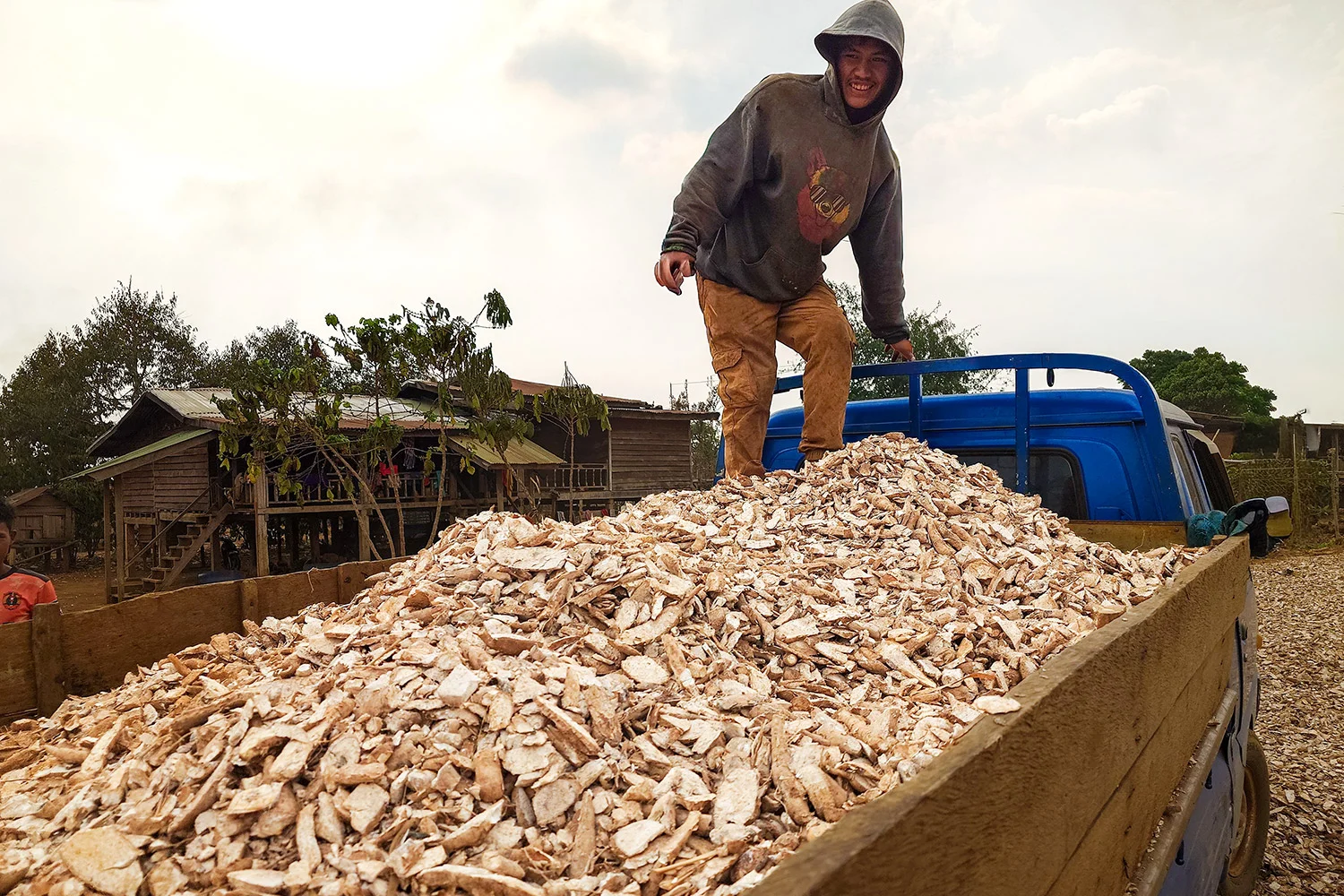
Manioc Worker, Pakxong, Laos
Get Ready For Collection
female-worker-manioc-pakxong
Joy During The Manioc Harvest

Behind the Lens – Photographer's Note

Before travelling through Laos, I knew very little about manioc. At first glance, the fields even reminded me of asparagus farming in Germany. Like asparagus, manioc is planted in rows and grown on raised ridges that allow the roots to develop beneath the soil.

What most visitors never see is the scale of the harvest. The valuable part of the plant is hidden underground. Large starchy roots are dug up, while the stems are saved and used to establish the next crop. In many ways, manioc can be processed and used much like a potato, making it one of the world's most important food crops.

What caught my attention near Pakxong were the vast drying fields. After harvesting, the roots are cut into small pieces and spread out in the sun. This process helps remove naturally occurring compounds that can release cyanide and prepares the crop for further processing.

Yet the person I remember most is not a factory manager or an agricultural expert. It is Joy. Standing among the harvested manioc with a thick cigar in her mouth, she seemed to embody the self-confidence and resilience of the people who work these fields. Long after I had forgotten production figures and processing methods, I still remembered Joy.

The photographs on this page are therefore about more than agriculture. They tell the story of a plant that quietly supports millions of people while remaining almost invisible to visitors. Once again, travel reminded me that some of the most fascinating discoveries are not famous landmarks, but the ordinary things that sustain everyday life.